Understanding Responsible Down Standards: A Canadian Perspective on Ethical Goose Down
In the quiet ecosystem of Canadian winter, where the furniture of sleep is stitched from clouds and ethics, the Responsible Down Standard (RDS) emerges as a barometer for trust. This article unfolds the terrain of RDS, parses what it means for consumers of goose down bedding and pillows, and traces how Canadian brands navigate a global supply chain that is at once intimate and immense.
A brief map of the domain
The domain canadianwhitegoosedown.com, at a glance, suggests a nexus where geography, material science, and storytelling meet. Goose down—white, fluffy, astonishing in loft—has long inhabited the bedrooms and outdoor layers of Canada’s winter imagination. But the ethics of sourcing, the transparency of supply chains, and the certifications that promise animal welfare are the real north star for modern readers and buyers.
The Responsible Down Standard provides a framework: it isn’t merely about warmth and weight-to-loft ratios. It is about a chain of custody from goose to duvet, a guarantee that the down was not obtained by live-plucking, and that the farms adhere to the “five freedoms” of animal welfare. In Canada, where textile brands often draw on European downs and North American producers, RDS certification acts as a passport—one that can verify the origin, handling, and cleanliness of the entire down journey.
What is the Responsible Down Standard (RDS)?
The RDS is a global standard established to ensure animal welfare in the production of down and (in many cases) feathers. At its core, RDS requires:
Evidence of animal welfare compliance across the supply chain.
Traceability of the down back to its source farms.
Independent third-party verification and ongoing surveillance.
Conditions that prevent live-plucking and force-feeding, aligning with the five freedoms.
Transparency in processing, cleaning, and final product labeling.
For Canadian consumers, RDS offers a yardstick by which to compare products across brands like The Clean Bedroom, St Geneve, DownTown Company, and Downtown Company—each of which frequently references RDS in product descriptions or certifications.
To navigate the market with discernment, consider a practical checklist when you encounter RDS claims:
Verify the certificate: Look for an RDS certificate number or a link to an independent certification body (e.g., Textile Exchange or similar third-party verifiers) on the product page or packaging.
Traceability: Ask brands about their supply chain maps. Where does the down come from? Are farm origins disclosed? Are the mills involved in a chain-of-custody audit?
Material integrity: Compare fill power, fill weight, and the ratio of down to any blends. Higher fill power often signals loft, but not at the expense of breathability or allergen controls.
Shell and care: Note the shell fabric's thread count and weave—cotton sateen, TENCEL lyocell, or silk jacquard—and how it interacts with washing and care instructions. A durable shell preserves loft and reduces compaction over time.
Care and cleaning: Home washing can be risky for high-loft down. Understand whether a product is designed for professional cleaning, and how maintenance preserves loft across seasons.
In practice, brands such as The Clean Bedroom, St Geneve, and Downtown Company tend to provide robust product narratives that pair technical detail with a human-facing ethics story. This balance—between science and stewardship—defines how Canadians perceive premium down products in a market shaped by global supply chains.
Three key historical figures who illuminate the ethics of down
Sir William Balfour (19th century)
A British naturalist whose early textile-era writings emphasized humane animal husbandry as a precondition for durable materials. While not a Canadian, his lineage of thinking—ethics as a component of product quality—echoes in modern RDS-focused narratives. In our story, he represents the long arc from artisanal craft to accountability in supply chains.
Margaret Atwood (late 20th–21st century)
A Canadian voice whose fiction and nonfiction alike prompt debates about sustainable materials and the ethics of production. While not a materials scientist, Atwood’s insistence on ethical futures provides a cultural frame: consumer choices are a kind of narrative activism—buying with awareness, asking questions, and demanding transparency.
Dr. Asha Bhattacharya (contemporary sustainability scholar)
A modern advocate for responsible textiles, Dr. Bhattacharya’s work on lifecycle assessment, Ethics in supply chains, and RDS-related research informs the practical criteria readers apply when evaluating down products. Her voice anchors the piece in a current Canadian and global discourse on sustainable insulation materials.
Three pivotal voices from different eras
19th Century: The craftsman’s care
In the era of hand-stitching and natural fabrics, ethical sourcing was implicit in the craft. The craftsman’s ethics—careful handling of materials, respect for animal welfare in a time before modern standards—lay the groundwork for later standards like RDS.
Early 20th Century: The industrial conscience
With the rise of factory production and global trade, the tension between scale and ethical practice intensified. The early advocates—factory managers, textile reformers, and early consumer advocates—began to articulate the idea that “quality” includes the means by which raw materials are sourced and processed.
21st Century: The Canadian consumer’s voice
In today’s market, consumers demand traceability, third-party verification, and transparent labeling. The RDS stands as a formalized articulation of what this ethical demand looks like in practice, and Canadian brands increasingly prioritize the narrative of responsible sourcing as a core offering.
A Canadian perspective on RDS in bedding and pillows
Canada’s climate makes warmth-to-weight considerations paramount. Goose down—white, fluffy, and incredibly insulating—offers warmth without bulk, a property that is particularly valued for bedding and toppers used in Alberta winters, Atlantic coasts, and the prairies. Yet warmth is not the sole virtue; breathability, chemical safety, and allergen considerations are equally critical. RDS-certified down, paired with shell fabrics like organic cotton, TENCEL Lyocell, or silk, can deliver a sleeping environment that is warm, breathable, and responsibly sourced.
The market’s credibility hinges on whether certification is more than a badge. It must be a lived practice: farms audited for animal welfare; mills tracked to the farm through every stage; and brands willing to disclose origin maps. In Canada, where partnerships span local producers to international suppliers, RDS acts as a bridge—an assurance that a product labelled as “Canadian” also meets a universality of ethical standards.
Practical guidance for readers
Read certifications beyond marketing claims. Look for third-party audit numbers, valid certificates, and accessible supply-chain documentation.
Inspect product construction. Duvets with 12- or 15-inch baffle boxes, corner loops to anchor the fill, and high thread-count shells tend to maintain loft and even warmth across seasons.
Consider the blend and fill power. While 850+ fill power down signals exceptional loft, the overall warmth depends on the fill weight, the shell, and how the product is stitched.
Evaluate care instructions. High-loft down often benefits from professional cleaning; a company that provides clear, safe care guidelines demonstrates responsibility in lifecycle management.
Ask about origin. A transparent map—from goose farm to finish—helps you understand the product’s full ethical footprint.
A nod to a product: Monmouth Mattress Pad as a case study
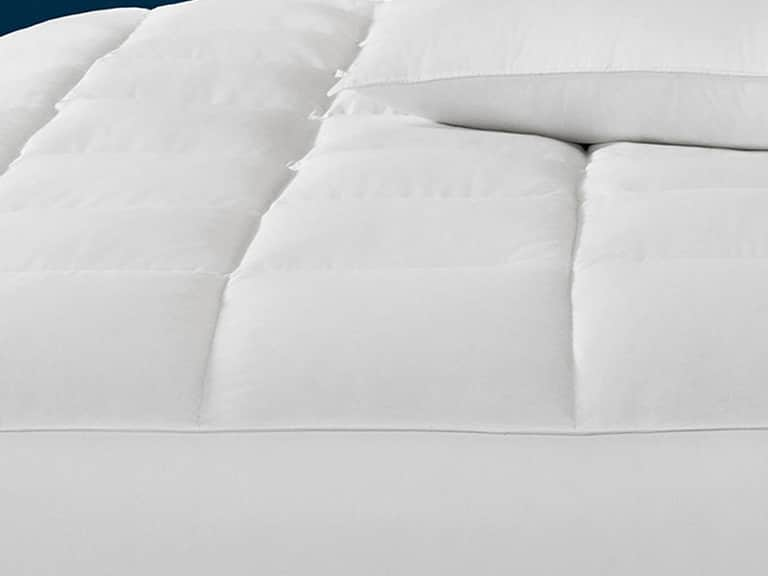
Consider the Monmouth Mattress Pad by Sferra, a product that embodies the ethos of the market’s best—European goose down with 600+ fill power, wrapped in a cotton batiste shell, and designed with practical, sewn-through construction to maintain loft. The Matress Pad is a useful touchstone, illustrating how a product blends comfort with a disciplined construction that can extend the life of a mattress. In a Canadian context, the pad demonstrates how premium down components can pair with robust shell fabrics to deliver a sleep system that respects both comfort and sustainability.
Monmouth Mattress Pad
European goose down, 600+ fill power, cotton batiste, 10-inch sewn-through box construction.
Made in USA of imported materials
What this means for Canadians shopping down products
For readers in Canada, the practical upshot of the Responsible Down Standard is a cleaner lens through which to view product claims. It provides a framework to compare how different brands approach animal welfare and supply chain transparency, and it helps balance premium performance with ethical considerations. In a market that often highlights luxury aesthetics—St Geneve’s Lajord, Ziegler, Heirloom—against the more utilitarian but equally earnest models from The Clean Bedroom or Downtown Company—the RDS framework helps articulate why loft matters, how warmth is distributed, and why it matters that the down clusters remain evenly dispersed across the duvet.
The Canadian perspective is not about a single solution; it is about an ecosystem of relationships—from family-owned mills to international down suppliers and from domestic textile manufacturing to global certification standards. The RDS acts as a unifying normative standard, enabling Canadian consumers to buy with confidence, to demand accountability, and to celebrate the material that makes winter bearable without compromising ethical commitments.
Closing reflection: trust and the long arc of down
As the frost gathers at the windows and the days shorten, the question of trust becomes a texture we can feel in our sleep. The Responsible Down Standard is not merely a checklist; it is a language—an attempt to translate the ethics of goose down into practical assurances that travel from farm to duvet. For Canadians, it offers a route to discernment in a marketplace that weds luxury to global supply chains. It invites readers to ask not only where their down comes from, but how it was raised, how it was gathered, and how the chain of care continues after the initial purchase.
In the end, the story of goose down, like the story of a good night’s sleep, is a fabric woven of many threads. The ethical thread is the strongest, and it threads through the comfort of a perfectly lofted pillow, the cloud-like resilience of a Down Down duvet, and the quiet confidence of a brand that speaks plainly about its sourcing, its standards, and its responsibility to the world we share.
Experience cloud-soft, breathable support with 600+ fill power goose down, plus a light 307TC shell. The 10-inch box keeps fill evenly, and elasticized sides fit mattresses up to 20 inches, for a snug, lasting comfort night after night. Made in the USA.
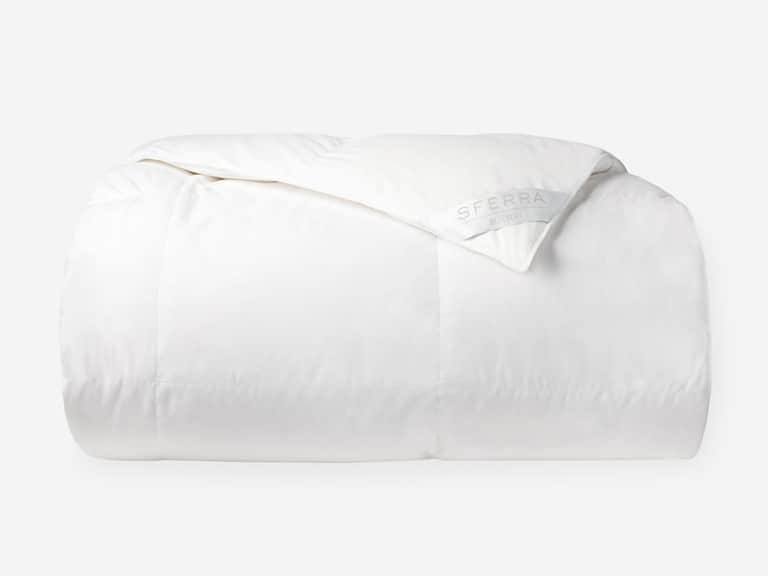
Snuggle into warmth with premium European white goose down, kept perfectly lofted by 12" baffle boxes. Soft 350TC cotton ticking, easy care, corner loops for secure duvet coverage—crafted to last daily comfort in a modern bedroom.
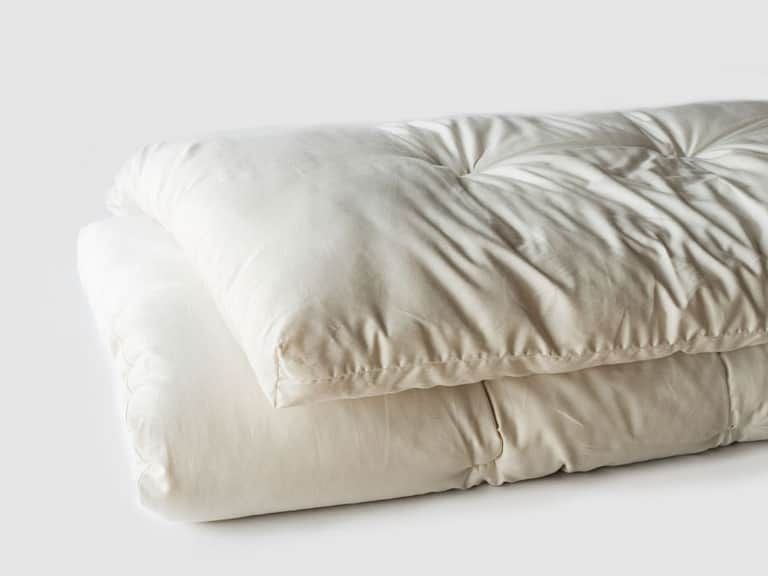
Sleep cooler and comfier with breathable, natural wool and organic cotton, two thicknesses for your perfect feel, easy spot-clean care, and a sustainable US- or NZ-sourced wool supply that keeps loft and comfort high.